Showing posts with label origins. Show all posts

13 February 2024

day of love

Christianity often modeled early celebrations and holidays on existing festivals and feasts. For example, Christmas holiday started out when winter solstice was celebrated. 

On the same trend, Valentine's Day was held on February 14 while Lupercalia was celebrated February 13 to 15. In time many of these old-time festivals were replaced by the spreading influence of this latest religion. 
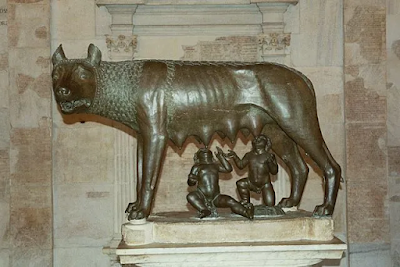
La Lupa Capitolina "the Capitoline Wolf" with figures of Romulus & Remus added

Lupercalia was observed to honor pagan gods of love, marriage, and fertility -Pan and Juno. It is celebrated with a rite of purification and health. Only slightly connected to fertility and more as a part of celebrating health. Not at all about love. 

17 April 2022

Easter origins

What means the term Easter itself? It is not a Christian name. It bears its Chaldean origin on its very forehead. Easter is nothing else than Astarte, one of the titles of Beltis, the queen of heaven, whose name, as pronounced by the people of Ninevah, was evidently identical with that now in common use in this country. This name as found by Layard on the Assyrian monuments, is Ishtar. ~ Alexander Hislop, The Two Babylons


Venus, Mars & Cupid, Piero di Cosimo

The concept of Ēostre or Ostara has had a strong influence on European culture since the 19th century - as reconstructed by Jacob Grimm and Adolf Holtzmann - from many fanciful legends and associations growing up around the figure of the goddess in popular speculations of these early folklorists.


A holiday named for the goddess is part of the neopagan Wiccan Wheel of the Year (Ostara, 21 March). In some forms of Germanic neopaganism, Ēostre is venerated as well and has been popularized again in current practice.